Yes, Meals on Wheels and SNAP stack, and neither program cuts the other. SNAP loads grocery money onto an EBT card every month.
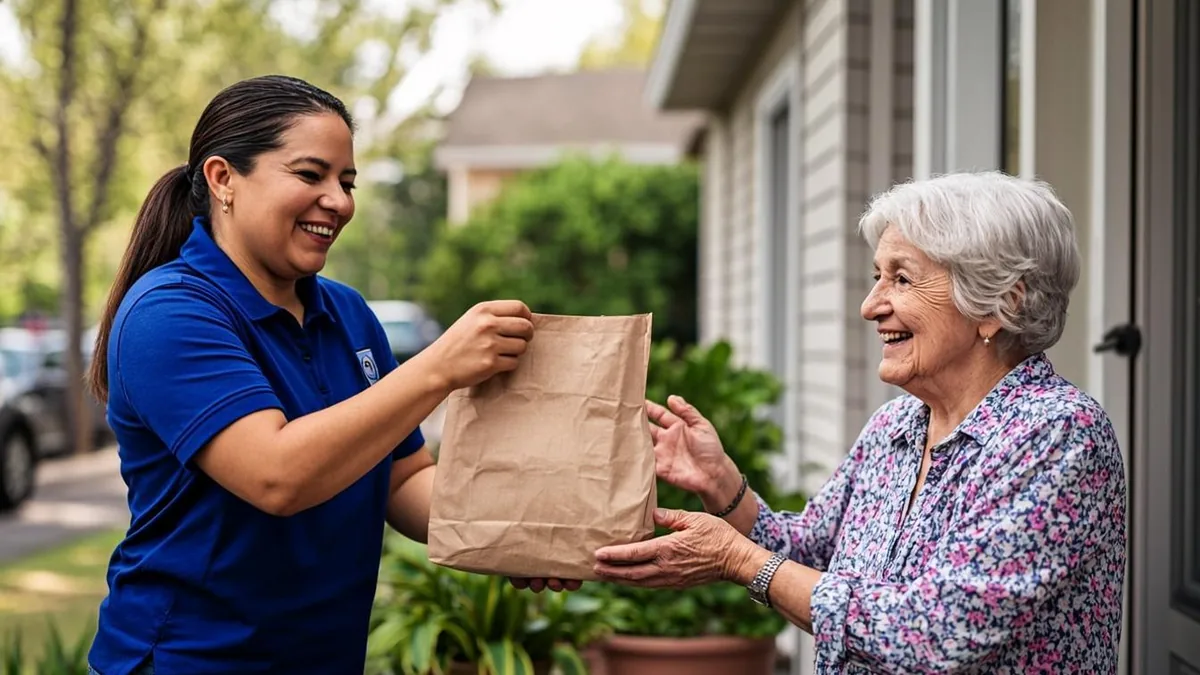
Meals on Wheels delivers prepared meals to the door, usually for a donation. The SNAP Meals on Wheels pairing works because the programs do different jobs. One funds the shopping trip, and the other covers the cooking.
Families arranging care for an isolated senior often assume they must pick one. They don't.
Gladys, 81, in Baton Rouge gets a hot lunch at her door every weekday. Her SNAP benefits cover cereal, eggs, milk, and the frozen dinners she heats at night.
This guide explains how the programs differ, what counts as income, and how to set both up. Most of the setup can be done by phone. Caregivers can handle nearly all of it.
💡 Quick facts
- SNAP is federal, income-based, and deposited monthly to an EBT card
- Meals on Wheels is local, donation-supported, and built around adults 60+
- Receiving delivered meals does not reduce SNAP benefits
- Both programs can start in the same week
The SNAP Meals on Wheels Pairing, Explained
SNAP is a federal nutrition program run by state agencies. It measures household income, then deposits benefits onto an EBT card each month. The card buys groceries at supermarkets, farmers markets, and some online retailers.
Meals on Wheels isn't one program but a network of local nonprofits. Volunteers deliver prepared meals to older adults who struggle to shop or cook. Money comes from donations, grants, and suggested contributions rather than a benefit formula.
| SNAP | Meals on Wheels | |
|---|---|---|
| Who runs it | USDA, through state agencies | Local nonprofit programs |
| Eligibility | Income and household rules | Typically age 60+ and homebound; no strict income test |
| What you get | EBT card for groceries | Hot or frozen prepared meals, delivered |
| Cost | Free benefits | Sliding donation; nobody is turned away for inability to pay |
| How to start | Apply through your state SNAP office | Call the local provider directly |
Different funding means different qualifying tests. SNAP eligibility comes down to numbers, using the income limits covered below. Meals on Wheels eligibility comes down mostly to circumstance: age, isolation, and trouble preparing food.
Neither intake asks about the other program. The SNAP application has no field for meal deliveries.
The meal program intake never asks for your EBT balance either. Each agency only evaluates what its own rules require.
Does Meals on Wheels Count as Income for SNAP?
No. Delivered meals from a senior meal program don't count as income for SNAP. Gladys's benefit doesn't shrink because a volunteer rings her doorbell at noon.
You may see warnings online about meal services counting as income. Those rules touch institutions and certain care settings, not home-delivered meals for seniors living at home. Keep the math simple: nothing counts.
The same logic runs in reverse. Getting approved for SNAP doesn't disqualify a senior from meal deliveries. The two programs don't share budgets, waitlists, or eligibility formulas.
Income still matters for SNAP itself, of course. Social Security, pensions, and wages all count under the standard rules. The delivered meals simply never enter that math.
How the Two Programs Work Together
The stack works best when each program covers a different gap. Meals on Wheels handles the noon meal, often the hardest one for someone with limited mobility. SNAP covers everything the deliveries skip: breakfast, evening meals, snacks, and fresh fruit.
Several national grocers accept EBT cards for delivery or pickup orders. A caregiver can order remotely and pay any delivery fee separately, since fees can't come from SNAP. That keeps groceries flowing without asking the senior to ride along.
Many local programs hand out frozen weekend meals on Fridays too. SNAP groceries fill whatever remains of the week.
A senior can use the EBT card on a weekly grocery run. Or a trusted person can shop as the authorized representative.
Knowing what the card actually covers makes those baskets easier to plan. Our plain-language list of what an EBT card buys helps caregivers shop with confidence.
💡 Caregiver tip
Ask the meal program about diabetic, low-sodium, and texture-modified menus on the first call. Then build the SNAP shopping list around whatever the deliveries skip. The two lists should complement each other, never duplicate.
What a Stacked Week of Meals Looks Like
Concrete numbers make the stack easier to picture. Say Gladys gets $120 a month in SNAP plus five delivered lunches each week. Her program suggests a $3 donation per meal, which she can afford on a fixed income.
The deliveries cover lunch Monday through Friday. SNAP buys oatmeal and bananas for breakfast, soup and sandwich fixings for dinner, plus coffee and crackers in between. A frozen lasagna and a bag of apples stretch the weekend when no van comes.
Five similar lunches at a diner would run $50 or more a week. The suggested donation totals about $60 a month instead. SNAP then shrinks the grocery bill on top of that.
None of this requires paperwork beyond the two intakes. The only weekly homework is the grocery list, and it gets shorter once lunch is handled.
Who Qualifies for Each Program
SNAP eligibility depends on household size and income. In FY2026, a one-person household can earn up to $1,696 gross per month, and a two-person household up to $2,292. A household with a member 60 or older only needs the net income test, the more forgiving line.
Compare every household size in our table of current SNAP income limits. Seniors also get a higher asset allowance and access to the medical deduction. Our guide to SNAP for adults over 60 walks through those senior-specific rules.
Household composition trips up some senior families, so here's the short version. Married couples usually count as one SNAP household even when only one spouse is over 60. A senior and an adult child who share meals generally apply together too.
A senior with a disability who can't prepare food separately may count as a household of one. That exception requires the others in the home to earn under 165% of the poverty level.
Meals on Wheels eligibility is softer and more local. Programs typically serve adults 60 and older, with priority for people who can't leave home or safely cook. There's no federal income test, though many programs suggest a donation based on ability to pay.
⚠️ Waitlists are real
Popular meal programs can run weeks behind, and delivery days vary by neighborhood. Call early rather than after a hospital discharge. If food money will run out within days, ask SNAP about expedited benefits, which can arrive within 7 days.
How to Set Both Up in One Week
Start with the Area Agency on Aging
Every region has one, and staff usually know the local meal providers personally. The federal Eldercare Locator finds your agency by city or zip code. One call gets you a list of everything operating nearby.
Interview the local meal provider
Ask three questions on that first call, and write the answers down, because programs differ county to county:
- Is there a waitlist?
- What donation do you suggest?
- Which meal types and diets do you cover?
Apply for SNAP in parallel
Applications go through the state SNAP agency, online or on paper. The interview usually happens by phone, and a decision arrives within 30 days. Benefits date back to the application date, so apply before deliveries start, not after.
Ask about the senior food box
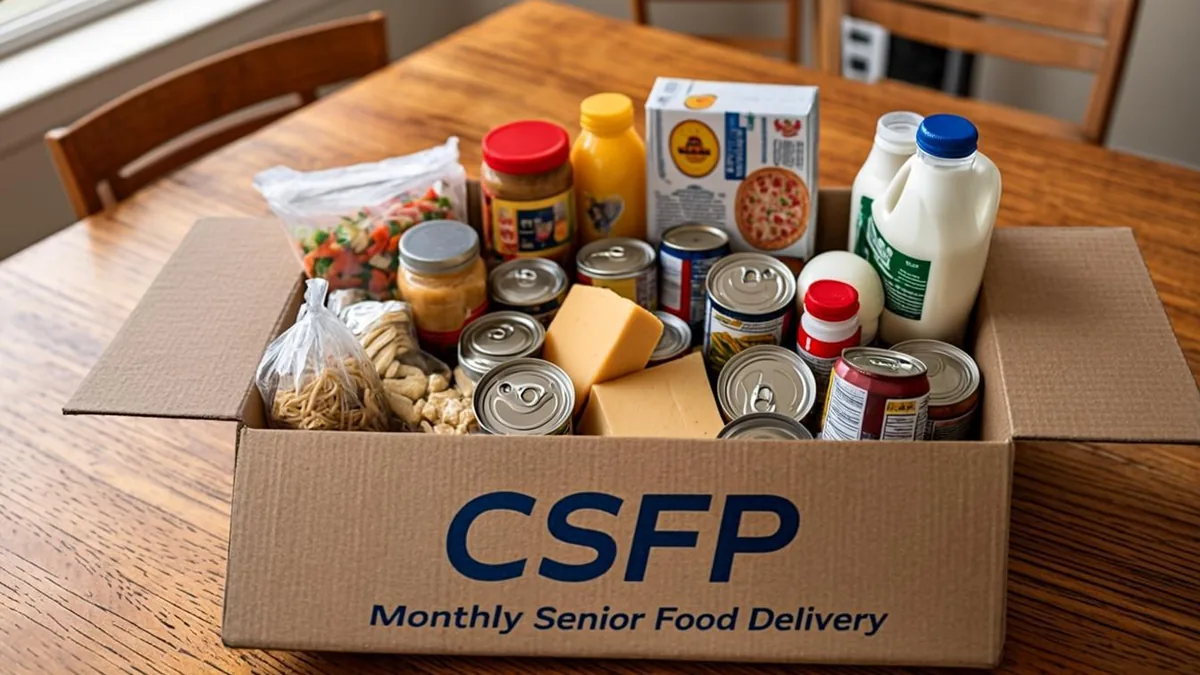
While you have the Area Agency on the phone, ask about the Commodity Supplemental Food Program. The monthly box adds shelf-stable staples to the stack. Details are in the next section.
While you wait for a meal slot
Waitlists change the order of operations, not the plan. Apply for the meal program first, then lean on SNAP and local food resources while the slot opens. Expedited SNAP exists precisely for kitchens running empty.
A household with under $100 in cash and under $150 monthly gross income can get benefits within 7 days. The same fast track applies when income plus cash adds up to less than monthly rent and utilities. Say the word "expedited" on the first call.
Food banks can bridge whatever remains. Most keep senior-friendly shelf-stable boxes on hand, and some pantries deliver. Ask the Area Agency which ones serve your ZIP code.
The Senior Food Box Adds a Third Layer
The Commodity Supplemental Food Program, often called the senior food box, is a third stackable program. It serves adults 60 and older with income at or below 130% of the poverty line. State agencies and food banks hand out a monthly package of shelf-stable USDA foods.
The box doesn't affect SNAP benefits either. CSFP is not income, and the programs were designed to overlap. A senior can receive SNAP, home-delivered meals, and the monthly box all at once.
One pickup per month is the usual rhythm, and some programs let a neighbor collect the box. Ask about home delivery when leaving the house is the problem.
Caseloads are limited, so availability depends on where you live. The official CSFP program page explains how the boxes work. Your Area Agency can tell you whether spots are open in your county.
A Caregiver's Playbook
Marianne, Gladys's daughter, lives forty minutes away and works full time. She called the Area Agency on a Tuesday, and a meal coordinator called back that afternoon. Gladys started lunch deliveries the following Monday.
The SNAP application took one online form and one phone interview. Marianne listed herself as the authorized representative, which lets her shop with Gladys's EBT card when work allows. Between deliveries and grocery runs, her mother now eats three covered meals a day.
Caregivers should track the EBT balance too, because shopping for someone else means planning around the deposit date. This guide to checking an EBT card balance covers every method. If homebound status is new, our post on SNAP help for homebound seniors covers shopping help and representative rules.
Keep copies of everything in one folder: the application, interview notes, approval letter, and the meal program intake sheet. Different offices ask for the same facts at different times. One folder turns a confusing month into three short phone calls.
Both programs renew on their own calendars too. SNAP recertification follows the schedule your state sets, and meal programs recheck intake periodically. Mark both dates in the same calendar so nothing lapses.
If the Area Agency route stalls, the national Meals on Wheels locator lists member programs by zip code. For application links in every state, the federal state agency directory is the fastest route. Broader qualifying questions live in our complete SNAP eligibility guide.
Frequently Asked Questions
Can you get Meals on Wheels and SNAP at the same time?
Does Meals on Wheels count as income for SNAP?
Who qualifies for Meals on Wheels?
How much does Meals on Wheels cost a senior?
Can SNAP pay for grocery delivery for a homebound senior?
What is the senior food box, and can it stack too?
How do I find my local Meals on Wheels provider?
Will receiving home-delivered meals reduce my parent's SNAP amount?
Sources: USDA Food and Nutrition Service (FY2026); CSFP program page; Meals on Wheels America; Eldercare Locator, Administration for Community Living.