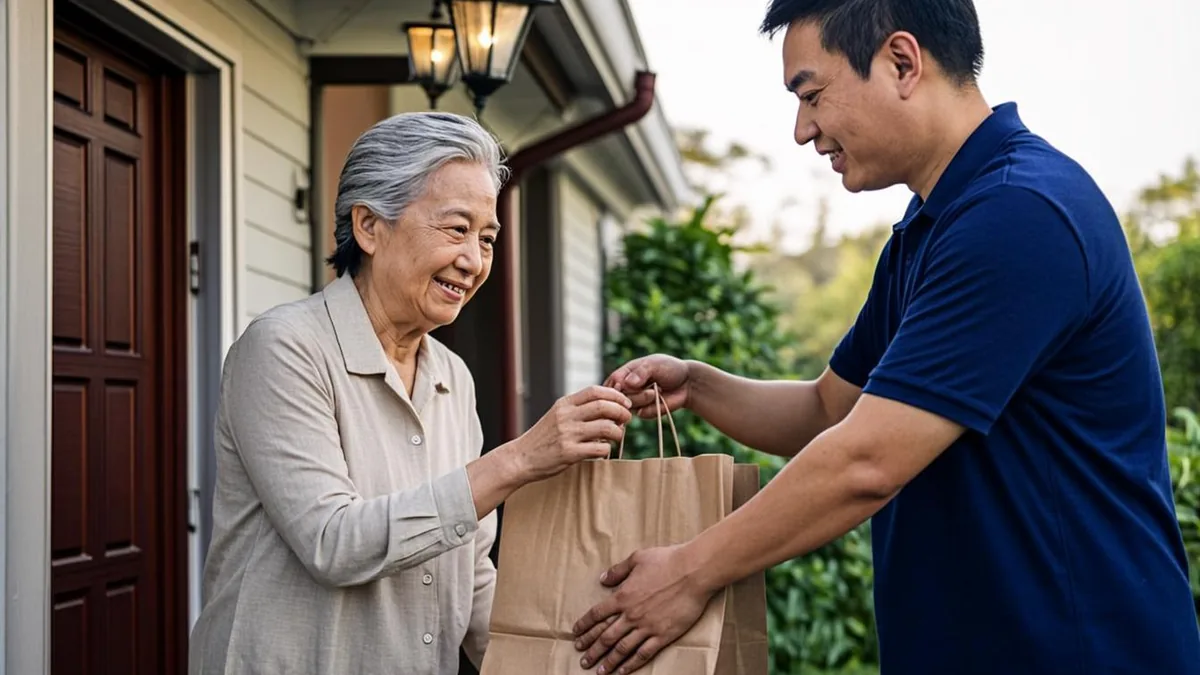
A parent who cannot leave the house still has full access to SNAP benefits. Income rules work the same for SNAP homebound seniors as for anyone else.
The application itself can be completed without a single trip to an office. Once benefits start, groceries can even be ordered for delivery with the EBT card.
That combination surprises a lot of families. They picture a program run through county offices, complete with the office visits their parents remember from decades ago.
The modern process runs on phone calls, online portals, and authorized representatives instead. Everything in this guide works even when the applicant never leaves a bedroom or a care facility room.
SNAP Homebound Seniors Face the Same Income Test, With Better Deductions
Eligibility starts with household income, not mobility. A one-person senior household must stay under $1,696 gross monthly income in fiscal year 2026. A two-person household sits under $2,292.
Social Security, pensions, and annuity payments all count toward those limits. Withdrawals from already-taxed retirement accounts generally don't. Distributions from untaxed accounts usually do.
Seniors then get deductions younger households rarely touch. Once any member turns 60, the shelter deduction cap disappears entirely. High rent stops punishing the benefit calculation.
senior medical deduction guide📌 What counts as the household
A home health aide who doesn't eat meals with your parent isn't part of the SNAP household. Neither is a sibling who lives elsewhere. Household size follows shared meals, not shared walls.
Many states also skip the asset test entirely for most applicants under broad-based categorical eligibility. That matters for seniors with modest savings and low monthly income. Where the test still applies, the limit sits at $4,500 for any household with a member aged 60 or older.
Someone Else Can Apply On Your Parent's Behalf
Nobody has to stand in line at a county office. The application can travel several ways, and most states accept every route below. A family member can complete any of them with basic information in hand.
- Online submissions through the state application portal
- Mailed paper forms
- Phone-assisted filing with a county worker
- An in-person visit by a helper
For ongoing representation, the formal tool is the authorized representative designation. Your parent signs a short form naming you. That one arrangement covers everything: applying, reporting changes, receiving notices, and using the EBT card on their behalf.
USDA state directoryGather the basics
Collect proof of income, current housing costs, utility bills, and out-of-pocket medical costs. Bank statements from the last 30 days round out the file.
Submit the application
Apply online, by phone, or by mail in your parent's name. Add a note that the applicant is homebound and needs a phone interview.
Handle the interview by phone
Most eligibility interviews happen over the phone anyway. If the office assumes a visit, request a phone one and cite mobility.
Request a home visit only if needed
Offices can arrange interviews at home when a phone call isn't workable. Ask early, because scheduling one takes extra lead time.
Phone Interviews Replace Office Visits in Every State
The interview step scares more families than it should. Federal rules let states hold interviews by phone or in person, and phone is now the default nearly everywhere. Your parent answers questions about income and expenses from the kitchen table, usually in twenty minutes or less.
Preparation beats anxiety here. Put the income letters, the rent receipt, and the pharmacy printout in one folder before the call.
When the interviewer asks about monthly medical costs, the answer should be one clean sentence with real numbers. That kind of readiness shortens the call. It also prevents follow-up letters.
application mistakes guideGroceries Can Come to the Door With an EBT Card
The shopping question has quietly solved itself over the last few years. Major national retailers accept EBT for online orders, including pickup and delivery in most metro areas. Several national delivery platforms now take EBT cards too, at participating stores.
The Checkout Rule Everyone Learns
One rule trips everyone at checkout, so learn it before the first order. EBT can't pay delivery fees, service charges, or tips. Those need a separate card, and the workaround is simple.
Buy the food with EBT, then pay the delivery fee with a small debit or credit charge. Many stores also waive fees above a purchase minimum, which stretches benefits further.
| Shopping option | EBT accepted | Extra fees covered by EBT? |
|---|---|---|
| Supermarket delivery through store site | Yes, in most states | No, pay fees separately |
| Store pickup orders | Yes, widely | No fees usually apply |
| National delivery platforms | Yes, participating stores | No, fees need another card |
| Local farmers market deliveries | Varies by program | Check each vendor |
Prepared Meals and Charity Options
Meal services that cook and ship prepared food sit in a different category. SNAP covers groceries and eligible food items, not hot prepared meals. A few states run exceptions for disabled and elderly recipients.
Meals on Wheels guideA Delivery Routine That Stretches Benefits
Ordering rhythm matters once delivery becomes routine. Set a weekly slot, keep a standing list of staples, and add frozen goods last.
Households that treat delivery like a scheduled errand spend less per order. The card balance shown at checkout keeps the running total visible before payment. That prevents surprise shortfalls mid-month.
USDA online purchasing pageBenefits Arrive on a Card That Requires No Trips to the Store
Approved benefits load monthly onto an EBT card that works like a debit card at checkout. Your parent can keep the card and PIN, or you hold both as the authorized representative. Whatever arrangement feels safest is fine, and unused benefits roll over month to month.
Checking the balance takes no branch visit either. The number on the back of the card gives balances by phone.
EBT balance guide💡 Pair SNAP with the senior food box
The Commodity Supplemental Food Program ships a monthly box of staples to seniors 60 and over. It stacks with SNAP, and both can run at once without cutting either benefit.
Card security deserves a moment of its own. EBT cards can be locked through most state apps when fraud worries surface. Replacements arrive by mail within a week in most states.
Report a lost card the day you notice it. Someone else can spend the balance until the freeze takes effect. The card never needs your parent's signature on a receipt, which keeps things simple for authorized users.
What If Benefits Were Denied Over a Mobility Issue?
Offices sometimes deny homebound applicants for missing an office appointment or failing to verify something by mail. These denials reverse easily when you know the rule. Ask for reconsideration, explain that a phone interview was never offered, and cite the federal option for alternative arrangements.
denial reasons guide