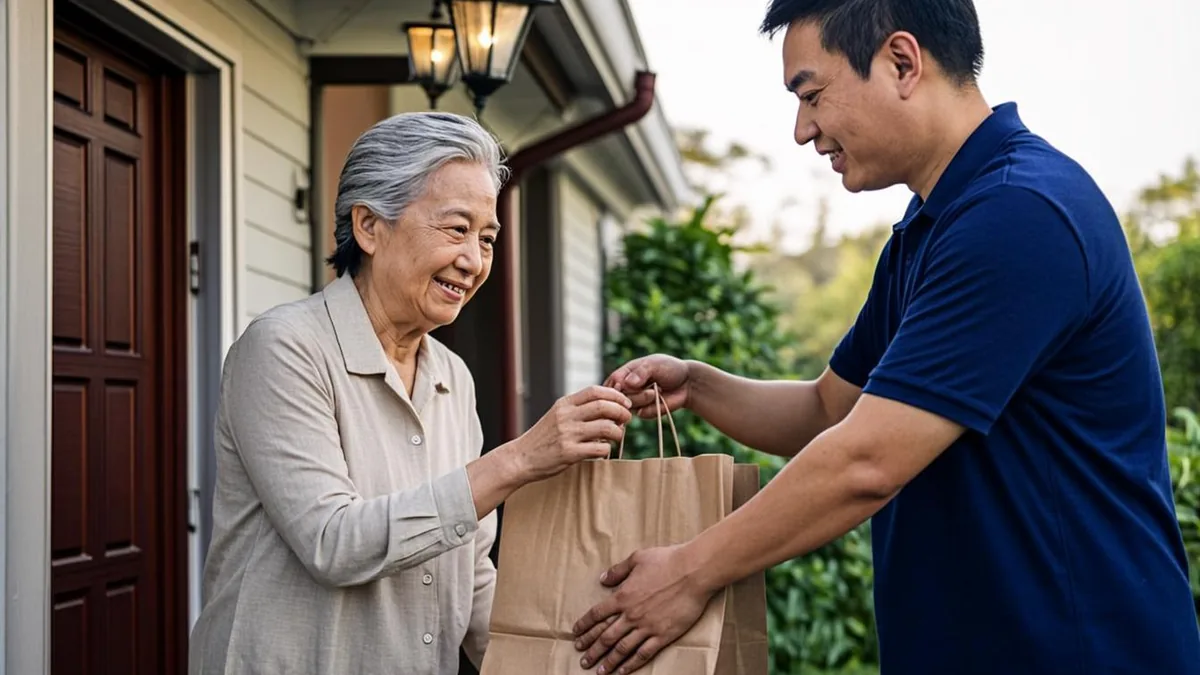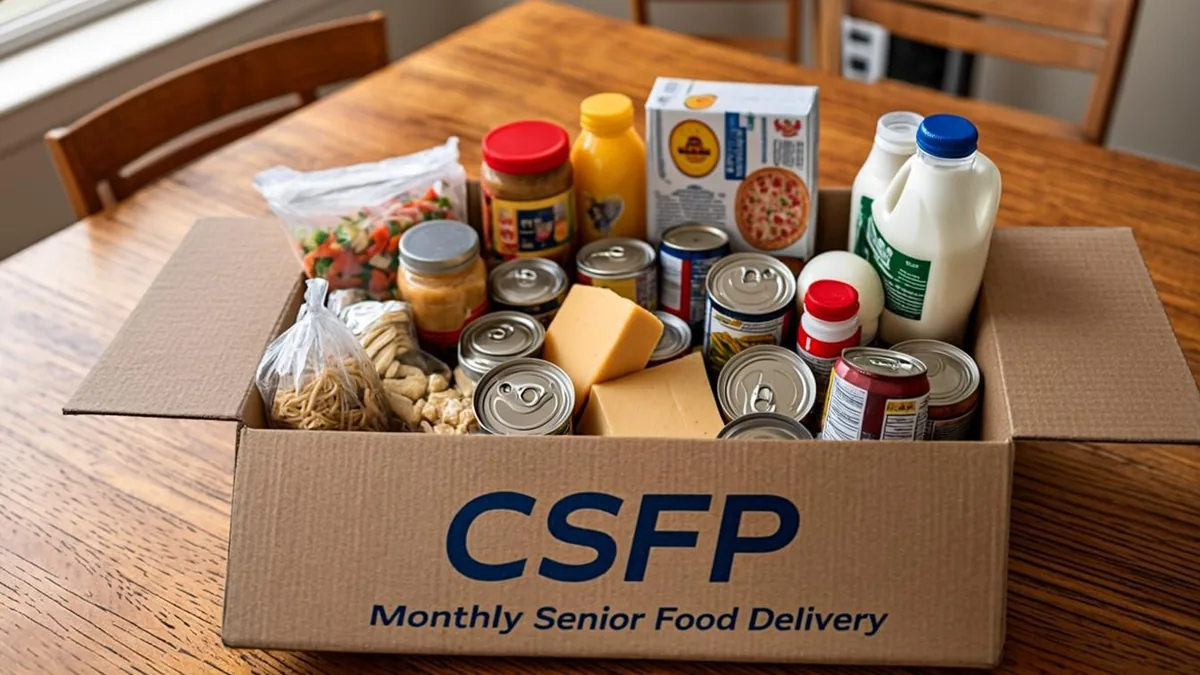
That monthly box of canned goods for seniors has an official name: the Commodity Supplemental Food Program, or CSFP. It's a USDA program that ships a free package of staple foods to people 60 and older with low incomes.
Seniors often ask whether the box and SNAP can run together. They can. CSFP SNAP stacking is clean, and neither benefit reduces the other.
This guide explains what the box contains, who qualifies, and how enrollment works. It also shows one real senior budget with both benefits running. All figures come from USDA rules for fiscal year 2026.
A quick framing before the details. SNAP is flexible grocery money on a card, while CSFP hands you a fixed set of nutritious staples every month. Households that pair them usually say the box does the heavy lifting on pantry basics.
What the CSFP Program Actually Is
CSFP is one of the longest-running federal food programs. USDA buys the food, then funds state agencies and Indian Tribal Organizations to distribute it. Local food banks and senior centers handle sign-ups and monthly pickup.
The USDA CSFP program page lists every state contact.
Despite the word "supplemental," many participants treat the box as the backbone of their pantry. One box per person arrives each month. Everything inside is shelf-stable, so you don't need a freezer.
Don't confuse CSFP with WIC, which serves pregnant women and young children. The senior food box serves the other end of the age spectrum. The two programs never overlap for one person, and the applications are entirely separate.
Household membership follows the same logic as SNAP. You count with the people you buy and prepare food with. A son who lives upstairs and cooks his own meals counts as a separate household, even under the same roof.
The food itself is standard American pantry fare, grown and packed domestically. States order from a USDA foods list, and dietitians help design the package. That's why the contents lean toward protein, calcium, and fiber rather than snacks.
CSFP Eligibility Income Limits for 2026
Two requirements decide everything. You must be at least 60 years old. Your household income must also sit at or below 130 percent of the federal poverty level.
That 130 percent line is the same one SNAP uses for its gross income test. One number governs both programs.
| Household size | Maximum monthly income for CSFP |
|---|---|
| 1 person | $1,696 |
| 2 people | $2,292 |
| 3 people | $2,888 |
| 4 people | $3,483 |
| Each extra person | add $596 |
Social Security counts as income for this test, and so does a pension. Money sitting in savings doesn't disqualify you, because the program has no asset test. States check income with an award letter or bank statement, usually a one-page job.
The income line moves every October with the cost-of-living adjustment. If you're close to the line, apply anyway, since small miscalculations go both ways. Our guide to SNAP income limits explains how the poverty line works.
⚡ Quick Facts About the Senior Food Box
The box is free, with no purchase requirement and no repayment ever. Participants re-apply once a year at most sites. Income proof is lighter than what SNAP asks for, and there's no interview to schedule.
What Comes in the Monthly Food Box
Every box follows a USDA recipe built to fill nutrition gaps older adults actually have. Exact items rotate by month and state, but the core lineup stays familiar.
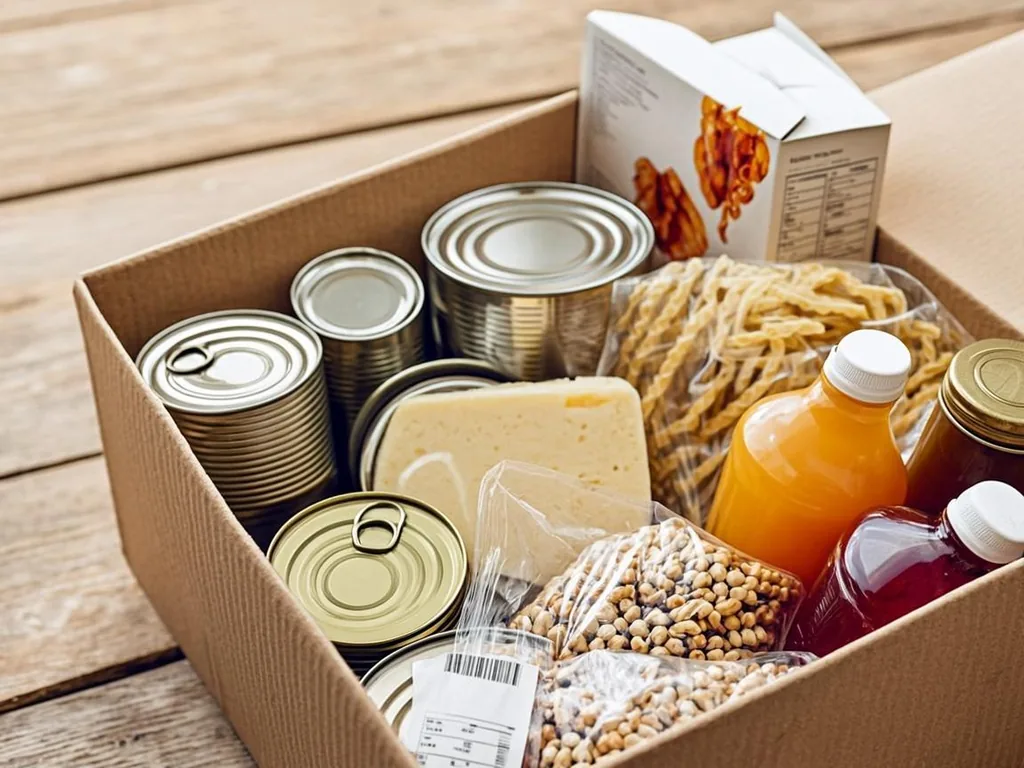
A typical month covers every major food group. Here's what the box usually contains:
- Protein: canned meat, poultry, fish, or peanut butter
- Dairy: shelf-stable or evaporated milk and blocks of cheese
- Grains: dry cereal, pasta, and rice
- Produce and legumes: dried beans, canned fruits, and canned vegetables
- Juice: bottled 100 percent juice
Nothing needs refrigeration before opening, which matters when fridge space is tight. The whole box fits in a cupboard. Shelf-stable milk is the item newcomers ask about most, and it works anywhere regular milk would.
Walter, 74, in rural Kentucky picks his box up at the fire station on the first Tuesday. He plans his whole month around it.
Box items fill the pantry, and everything else comes from his SNAP budget. He calls the cheese "the best thing the government ever made."
How CSFP SNAP Stacking Works Each Month
The two programs are built to coexist, and federal rules treat them as separate benefits. Getting the box does not lower your SNAP allotment. Getting SNAP does not make you ineligible for the box.
The roles differ in a useful way. SNAP gives you flexible grocery money on an EBT card each month. CSFP hands you a fixed set of staples that costs you nothing.
The applications are separate too, and that cuts both ways. A SNAP denial has no effect on a CSFP application, and a long SNAP renewal never interrupts a box. You handle each program on its own paperwork and schedule.
The reverse also helps in a gap year. A senior whose SNAP case closes during recertification keeps receiving the box while the SNAP issue gets sorted. Your nutrition doesn't have to ride on one office's processing speed.
Eleanor, 72, lives alone in Toledo on $1,050 a month from Social Security. Her SNAP case works out to about $188 monthly after her rent and medical deductions. The food box arrives on top of that, and she saves her SNAP dollars for fresh produce, eggs, and coffee.
Budgeting One Month With Both Benefits
Here's how Eleanor's October actually looks in dollars. Her box contributes canned chicken, peanut butter, cereal, cheese, and two cartons of shelf-stable milk. Juice, rice, and canned green beans and peaches round it out.
That covers breakfast and most lunches without touching her card. Her $188 in SNAP covers the fresh side of the month.
She buys a dozen eggs for around $4 and bananas and apples near $9. Ground turkey runs about $11, and coffee is $13. Bread, fresh milk, and onions take another $12 or so.
The pattern leaves her a cushion for a salmon fillet or a birthday cake. Before CSFP, those items were the first things cut. Seniors who pair the programs describe the change as going from planning around hunger to planning around menus.
💡 Let the Box Set Your Pantry, Then Spend SNAP on Fresh
Treat the box as your guaranteed staples so your SNAP dollars go further. Spend the card on what the box never carries: fresh produce, eggs, meat, coffee, and spices. Seniors on SNAP also get extra deductions that can raise the monthly amount.
What the Box Covers Versus What SNAP Buys
The comparison below shows why the pairing works so well for seniors. The box is predictable but narrow. SNAP fills every gap the box leaves.
| Food item or task | CSFP food box | SNAP benefits |
|---|---|---|
| Protein | Canned meat, fish, or peanut butter | Any protein, fresh or frozen |
| Milk | Shelf-stable or evaporated | Fresh dairy, any brand |
| Produce | Canned fruits and vegetables | Fresh, frozen, canned, seeds |
| Flexibility | Fixed monthly menu | You choose every item |
| How you get it | Monthly pickup site | EBT card at stores |
One honest caution belongs here. The box is built for one person, so a two-senior household should enroll each eligible spouse. Two boxes plus SNAP covers a retired couple far better than either benefit alone.
How to Enroll in the Senior Food Box
Enrollment runs through state agencies and food banks, not the county SNAP office. Most appointments take under 30 minutes. Here's the usual sequence.
Find your local CSFP agency
USDA lists every state contact online, and food banks know their own pickup sites best. One quick call usually settles where your nearest site is.
Fill out the short application
You'll show proof of age and income, usually an ID and an award letter. The form is one page at most sites.
Choose your pickup routine
Pick a site and day you can reach every month, or ask about home delivery for homebound seniors. Some agencies let a neighbor pick up with written permission.
Recertify on the schedule they give you
Most agencies re-verify income once a year. A missed recertification letter is the most common way people drop off the list.
If you decide to add SNAP too, the applications share many of the same documents. Our complete SNAP eligibility guide explains the fuller application, including the deductions seniors qualify for. Rules for people over 60 are friendlier than most expect.
Waiting Lists, Caseload Caps, and Other Realities
USDA assigns each state a caseload number every year, and states can't serve past it. Popular areas sometimes carry waiting lists measured in months. Get on the list anyway, because openings surface as current participants move or pass away.
The box is designed to supplement meals, not to cover a month of eating by itself. Plan on your SNAP benefits, pension, or community meals for the rest. Food banks that run CSFP can usually refer you to other programs during the same visit.
⚠️ A Waiting List Is Not a Rejection
Some states cap enrollment and keep names in a queue. Ask whether your area prioritizes people with the lowest incomes or highest need. Meanwhile, SNAP, congregate meal sites, and pantry visits stay open to you.
One more pairing worth knowing: many CSFP sites screen seniors for SNAP on the spot. If you've avoided SNAP because the application felt heavy, this is the gentlest entry point you'll find.
For the wider map, USA.gov keeps a plain-language overview of every federal food assistance program. It's worth ten minutes once your box is scheduled.
Home-delivered meal programs like Meals on Wheels can run alongside both benefits. SNAP and CSFP treat those deliveries as separate services, and neither counts the meals against you. If cooking has become the hard part, ask the agency about a referral while you're there.
Grandparents raising grandchildren sometimes assume the senior box is their only option. The grandchildren usually qualify for SNAP and school meals separately, so the household can combine programs. Ask the food bank to screen everyone in the home at once.
Frequently Asked Questions
Can I get CSFP and SNAP at the same time?
Does the senior food box count as income for SNAP?
How much food is in one CSFP box?
Does CSFP cost anything to join?
Can my spouse get a box if they are under 60?
What if my state has a waiting list?
Can someone pick up my box for me?
Will the food box affect my taxes or other benefits?
Sources: USDA Food and Nutrition Service (FY2026); Commodity Supplemental Food Program page and CSFP income guidelines; USA.gov food assistance.