
Vermont SNAP Benefit Calculator
Vermont renamed its program 3SquaresVT years ago, and the name stuck because it captures what the benefit is really about. Estimate your monthly amount below, then learn how the state runs it.
Vermont SNAP Calculator
Vermont renamed its program 3SquaresVT, though the income rules behind the friendlier name match this calculator exactly.
Vermont SNAP Calculator
Instant estimate • Free • No signup required
Total people living and eating together
Wages, Social Security, unemployment, child support — all income before taxes
Rent or mortgage payment + average utility costs (electric, gas, water)
Childcare or adult dependent care expenses needed for work
Vermont Quick Facts
- ✓Program Name: 3SquaresVT (Vermont EBT)
- ✓Max Monthly Benefit: $306-$1,841
- ✓Population: 0.65M
- ✓Region: Northeast
Important Note
3SquaresVT sounds friendlier than SNAP, but the income rules underneath match the federal charts exactly. Deductions tuned to Vermont's steep heating and housing costs can lift your final benefit meaningfully. The Economic Services Division schedules interviews and issues its decisions within the federal thirty-day window.
FY2027 Federal SNAP Limits
- ✓Max benefit (1 person): $306/month
- ✓Max benefit (family of 4): $1,023/month
- ✓Gross income limit: 130% of FPL
- ✓Net income limit: 100% of FPL
About Vermont SNAP Benefits
The Department for Children and Families, through its Economic Services Division, administers 3SquaresVT from offices in Barre and Burlington. Applications move through the state's online portal, by mail, or over the phone.
Benefits post monthly to an EBT card honored at Vermont groceries, co-ops, and farmers markets. The state also matches EBT spending at many farm stands, putting more local food on the table.
Eligibility follows federal FY2027 charts with deductions tuned for Vermont's high heating and housing costs. A DCF specialist schedules your interview after the application arrives, and decisions follow the thirty-day rule.
📋 On This Page
- 3SquaresVT: Numbers First
- Why Vermont Calls It 3SquaresVT
- Income Guidelines: The 185 Percent Screen
- Households That Skip the Gross Test Entirely
- Benefit Amounts for FY2027
- Savings and Resources in Vermont
- Deposit Day: Everyone Loads on the 1st
- Deductions That Lower Countable Income
- Worked Example: A Burlington Household of Three
- Work Rules and ABAWD
- How to Apply Through Vermont DCF
- Using the Vermont EBT Card
- FAQs
3SquaresVT: Numbers First
Vermont runs one of the most generous SNAP programs in the country, and it does so under a name most residents barely connect to the federal program: 3SquaresVT. Instead of the standard 130 percent gross income screen used in most states, Vermont screens applicants at 185 percent of the federal poverty level — $2,461 a month for one person in FY2027, rising to $5,088 for four. There is no asset test for most households, and every single participant in the state, from Burlington to Brattleboro, gets benefits loaded on the 1st of the month.
The trade-off is that Vermont keeps the federal net income test: after deductions, a household's countable income must still fall under the 100 percent poverty line to receive a monthly payment. All figures on this page are FY2027 values effective October 1, 2026, taken from the Vermont Department for Children and Families income guidelines and USDA tables.
Why Vermont Calls It 3SquaresVT
The Department for Children and Families (DCF), through its Economic Services Division, administers the program statewide. Vermont rebranded SNAP as 3SquaresVT to reduce the stigma that keeps eligible families from applying — the name points to the goal of three square meals a day rather than an old federal program label. Functionally it is the same program: the same federal EBT card, the same grocery store acceptance, the same federal rules underneath. When you see 3SquaresVT on a Vermont agency letter or the DCF website, it means SNAP.
Three contact channels cover most needs. The main DCF benefits line at 1-800-479-6151 handles applications, interviews, and eligibility questions. Once benefits are flowing, Vermont EBT card customer service at 1-800-914-8605 covers balances, PIN resets, and lost cards. And the Vermont Food Bank runs a dedicated 3SquaresVT help line at 855-855-6181 for residents who want help filling out the application or figuring out whether they qualify before contacting the state. Applications and case management happen online through the MyBenefits portal at dcf.vermont.gov.
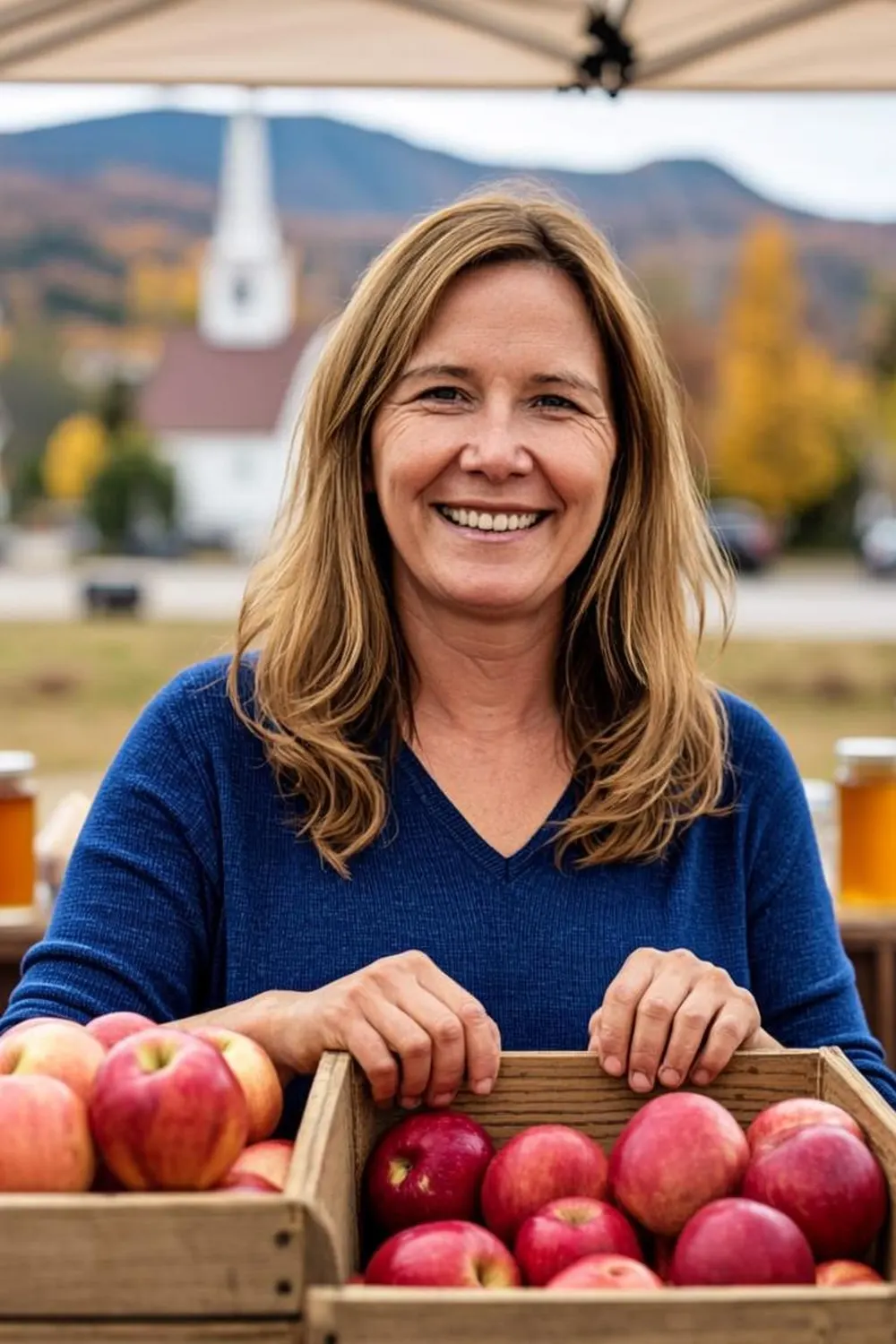
Vermont also runs Farm To Family, a state program that gives 3SquaresVT households coupons to spend at participating farmers markets during the summer season — a small extra worth asking about when you apply.
Income Guidelines: The 185 Percent Screen
Vermont's eligibility screen sits at 185 percent of the federal poverty level, one of the highest thresholds in New England. A one-person household can earn up to $2,461 gross monthly and still apply; a family of four clears the screen up to $5,088. The table below is Vermont's official FY2027 guideline, effective October 2026.
| People in Household | Expanded Gross Monthly Income (185% FPL) | Maximum Net Monthly Income (100% FPL) |
|---|---|---|
| 1 | $2,461 | $1,330 |
| 2 | $3,337 | $1,804 |
| 3 | $4,212 | $2,277 |
| 4 | $5,088 | $2,750 |
| 5 | $5,964 | $3,224 |
| 6 | $6,839 | $3,697 |
| 7 | $7,715 | $4,170 |
| 8 | $8,591 | $4,644 |
| Each extra person | +$876 | +$474 |
Both columns matter, and they work in sequence. The gross test asks whether your household's total income before deductions sits under the 185 percent line. If it does, deductions come out next — housing costs, a standard deduction, 20 percent of earned income, child care — and the remaining net income must fall under the 100 percent column to qualify for an actual monthly payment. A household that passes gross but fails net may still qualify for connected benefits, but the 3SquaresVT payment itself requires clearing both lines.
What the 185 percent line means in practice
A Burlington renter earning $18 an hour at 32 hours a week brings home about $2,496 gross monthly — just over the one-person line. The same person working 30 hours ($2,340) passes with room to spare. Context helps here: neighboring New Hampshire screens at 200 percent, Massachusetts at 200, and states like South Dakota still enforce the standard federal 130. Vermont's 185 sits in the middle of that pack — wider than most of the country, narrower than its northern New England neighbors.
Households That Skip the Gross Test Entirely
Vermont has two carve-outs that almost no other state offers, and both come from state policy rather than federal mandate. The gross income test does not apply to a household where every member receives SSI and Reach Up — Vermont's cash assistance program for families with children. And it does not apply to a household that has received the Vermont Earned Income Tax Credit in the last 12 months. In plain terms: if your tax filings qualified you for Vermont EITC, the state treats that as proof of income need and screens you on net income alone, no matter how the gross numbers look.
The EITC waiver catches a specific real-world group: seasonal workers, part-timers, and parents whose hours swing month to month. A household that earned more than $2,461 during a busy summer quarter may still carry a Vermont EITC from last year's return and qualify under the waiver during a slow winter. Bring your most recent state tax return when you apply and ask the ESD worker directly whether the waiver applies — Vermont workers know this rule well, but it is on you to raise it.
Benefit Amounts for FY2027
Approved households receive the standard 48-state allotment table — Vermont does not pay above the federal maximum. Zero-income households receive the maximum for their size, and the payment tapers by roughly 30 cents for each dollar of countable net income until it reaches the $25 minimum for one- and two-person households.
| People in Household | Maximum Monthly Benefit |
|---|---|
| 1 | $306 |
| 2 | $562 |
| 3 | $808 |
| 4 | $1,023 |
| 5 | $1,217 |
| 6 | $1,463 |
| 7 | $1,616 |
| 8 | $1,841 |
| Each extra person (9-17) | +$225 |
Large households should note the cap structure: the per-person increment of $225 applies through a household of 17, and households of 18 or more receive $3,887. Vermont households also keep SNAP eligibility for other connected programs — a 3SquaresVT case automatically enrolls children for free school meals and can unlock discounts on utility and phone programs.
Savings and Resources in Vermont
For most Vermonters, there is no resource test at all — bank balances, retirement accounts, and vehicle equity do not affect eligibility, because the state's 185 percent broad-based categorical eligibility rules carry no asset limit. Retirement accounts including 401(k)s, IRAs, and education savings accounts are never counted regardless.
The one Vermont quirk: seniors and disabled households above 185 percent
Vermont applies a $4,250 resource limit only to a narrow group — households with a member age 60 or older or with a disability whose income sits above the 185 percent line and who qualify through separate federal household rules instead. If your household qualifies under the standard 185 percent screen, this limit does not touch you. The $4,250 figure is Vermont's own, distinct from the federal $4,750 — another reason Vermont cases are best checked against state guidance rather than generic national articles.
Deposit Day: Everyone Loads on the 1st
Vermont is one of a small number of states that deposit every household's benefits on a single fixed date. Per the USDA issuance schedule, 3SquaresVT benefits are made available on the 1st of every month — no SSN digits, no case numbers, no county bands, no exceptions. Whether you live in a Burlington apartment or a Northeast Kingdom farmhouse, your full monthly amount lands on the same day.
This matters for budgeting. Because every card in the state reloads on the 1st, grocery stores and farmers markets are busiest in the first week, and delivery slots from online retailers fill fast around month-end. Plan bigger shopping trips for the first week only if you want first-pick of sales; otherwise the steady middle-of-month stretch sees shorter lines and the same shelf stock.
Deductions That Lower Countable Income
Deductions are where 3SquaresVT awards are won or lost, because Vermont keeps the net income test. Every dollar of verified deduction pulls net income down and the benefit up.
Standard deduction
$217 monthly for households of 1-3, $229 for four, $268 for five, $308 for six or more. Automatic — no documentation beyond household size.
Earned income deduction
20 percent off gross earned income before anything else. A $2,900 paycheck count drops by $580 immediately, which is why working households do far better than raw income suggests.
Dependent care and child support
Child care that lets you work or attend training comes off next, as do court-ordered child support payments you actually pay. Keep provider receipts.
Medical costs for seniors and disabled members
Out-of-pocket medical expenses above $35 a month for any member age 60 or older or receiving disability benefits are deductible — prescriptions, transport to appointments, dental.
Excess shelter
Rent, mortgage, taxes, and utilities above half your adjusted income become a deduction, up to a $769 monthly cap for most households. Homeless households claim a standard $205.66 shelter deduction instead. Vermont households receiving fuel assistance generally qualify for the full utility standard — say so at interview.
Worked Example: A Burlington Household of Three
Sarah works the register at a Burlington farm market and lives with two children. Her gross monthly wage is $2,900. Watch the arithmetic run the way an ESD caseworker would:
Start with the gross test: $2,900 sits under the three-person 185 percent line of $4,212, so Sarah passes. The earned income deduction removes 20 percent: $2,900 − $580 = $2,320. The standard deduction takes another $217, leaving $2,103 of adjusted income. Her rent is $1,150; half of adjusted income is $1,051.50, so the excess shelter deduction is $1,150 − $1,051.50 = $98.50 — well under the $769 cap. Net income lands at $2,103 − $98.50 = $2,004.50, under the three-person net line of $2,277.
The benefit equals the $808 maximum minus 30 percent of net income: $808 − (0.30 × $2,004.50) = $808 − $601.35, rounded down to $206 a month, loaded on the 1st. The full chain, as the caseworker computes it:
| Step | Amount |
|---|---|
| Gross earned income | $2,900 |
| − 20% earned income deduction | − $580 → $2,320 |
| − standard deduction (household of 3) | − $217 → $2,103 |
| − excess shelter ($1,150 rent − half of $2,103) | − $98.50 → $2,004.50 net |
| $808 maximum − 30% of net ($601.35) | $206 monthly benefit |
If Sarah's market participates in Farm To Family during summer, she can stretch that figure further with coupons at the same stand where she works.
Work Rules and ABAWD
Federal work rules apply in Vermont in full: adults 18 through 64 who are not raising minor children must work, train, or volunteer at least 80 hours a month to receive more than three months of benefits in any 36-month window — the ABAWD time limit. Vermont tracks the months automatically, and a household that hits the cap sees benefits stop until hours recover.
Exemptions cover pregnancy, physical or mental unfitness for work, caring for a dependent child under six or an incapacitated person, students meeting their own rules, and veterans or homelessness. Unemployment insurance enrollment also satisfies Vermont's work-registration expectations. Vermont Food Bank staff at 855-855-6181 can walk you through whether an exemption fits before you file anything with ESD. If your hours fall, report it and ask about the state's employment and training slots — approved program hours count toward the 80-hour total.
How to Apply Through Vermont DCF
File the application
Online through the MyBenefits portal at dcf.vermont.gov, by phone at 1-800-479-6151, or on paper at any ESD district office. One application covers 3SquaresVT plus Fuel Assistance and other DCF programs you tick.
Interview and documents
An ESD worker interviews you within 30 days — usually by phone. Have ID, proof of Vermont address, pay stubs, rent, utility bills, and any child care or medical costs ready. If you claim the EITC or SSI/Reach Up waiver, bring the tax return or award letters.
Decision and EBT card
Standard decisions arrive within 30 days; the Vermont EBT card follows by mail. Emergency cases — under $150 gross income with $100 or less in cash, or shelter exceeding income and cash — qualify for expedited benefits within 7 days. Say "expedited service" on first contact.
Already receiving benefits? Renewals and address changes go through MyBenefits too, and the food bank line at 855-855-6181 remains free help at any stage.
Using the Vermont EBT Card
Benefits load onto the Vermont EBT card, which spends like a debit card at grocery stores, convenience stores, and farmers markets across the state — Hannaford, Price Chopper, Shaw's, and market vendors accepting 3SquaresVT. Customer service at 1-800-914-8605 runs around the clock for balances, PIN resets, and replacements, and the online cardholder portal shows transaction history free of charge.
The card buys groceries, seeds, and plants that produce food for the household — not hot prepared meals, alcohol, vitamins, pet food, or cleaning supplies. Vermont shoppers can use EBT online at participating national retailers for eligible grocery items, with delivery fees paid separately. At summer farmers markets, look for the Farm To Family sign alongside the regular SNAP sign: both spend from the same card, but Farm To Family coupons add value SNAP alone does not.
Guard the PIN. No DCF worker, store clerk, or family member may ask for it, and stolen benefits are only replaceable within federal reporting windows — report a skimmed card the same day you notice.
3SquaresVT FAQs
What is the income limit for 3SquaresVT right now?
Do EITC or SSI households really skip the gross income test?
When do Vermont SNAP benefits get deposited?
How much does 3SquaresVT pay per month?
Does Vermont check my savings account?
How long does 3SquaresVT approval take?
What are the SNAP work requirements in Vermont?
Can I apply for 3SquaresVT if I am an immigrant?
Related Guides
FY2027 allotments and income tables effective October 1, 2026 per USDA. Vermont's 185 percent screen, EITC/SSI gross-test waivers, and $4,250 resource limit reflect DCF 3SquaresVT income guidelines (October 2026) and Vermont Legal Aid program guidance; deposit schedule and BBCE status per USDA records. DCF Economic Services Division makes the final eligibility decision on every case.
Find Another State
SNAP benefit calculators for all 50 U.S. states