
Key Fact: Federal law requires your CalFresh application to be processed within 30 days — or just 7 days if you qualify for expedited benefits.
Waiting for food assistance can feel like watching paint dry. You submitted your CalFresh application and now you're checking the mail every day. The kids need lunch. The fridge is running on condiments and expired yogurt. So — how long does a CalFresh application actually take?
The honest answer: most people get benefits within 14 to 30 days. But the timeline depends on a few moving parts. Some applicants get approved in under a week. Others hit snags that push things right up to the 30-day deadline.
This guide walks through every step of the process, day by day. You'll see exactly what happens after you hit "submit," when to expect your EBT card, and how to avoid the common mistakes that slow people down.
The 30-Day Rule: What Federal Law Requires
The USDA, which runs SNAP at the federal level, set a hard deadline decades ago. Every state must process your application within 30 calendar days. Not business days. Calendar days, including weekends and holidays.
This rule exists so people don't fall through the cracks while bureaucrats shuffle paperwork. Thirty days is the maximum, not the target. Most county workers aim to finish well before that deadline.
expedited SNAP benefits based on income7 CFR 273.10: "The State agency must act on the application within 30 calendar days of the date of application."
What happens if the county misses the 30-day window? They've broken federal law. You can file a fair hearing request, and the state may owe you benefits backdated to day 30. But in practice, most counties process on time — they just cut it close.
Complete Application Timeline: Day by Day
Here's what actually happens behind the scenes after you submit your CalFresh application. Timing varies by county and caseload, but this reflects the typical experience for most applicants.
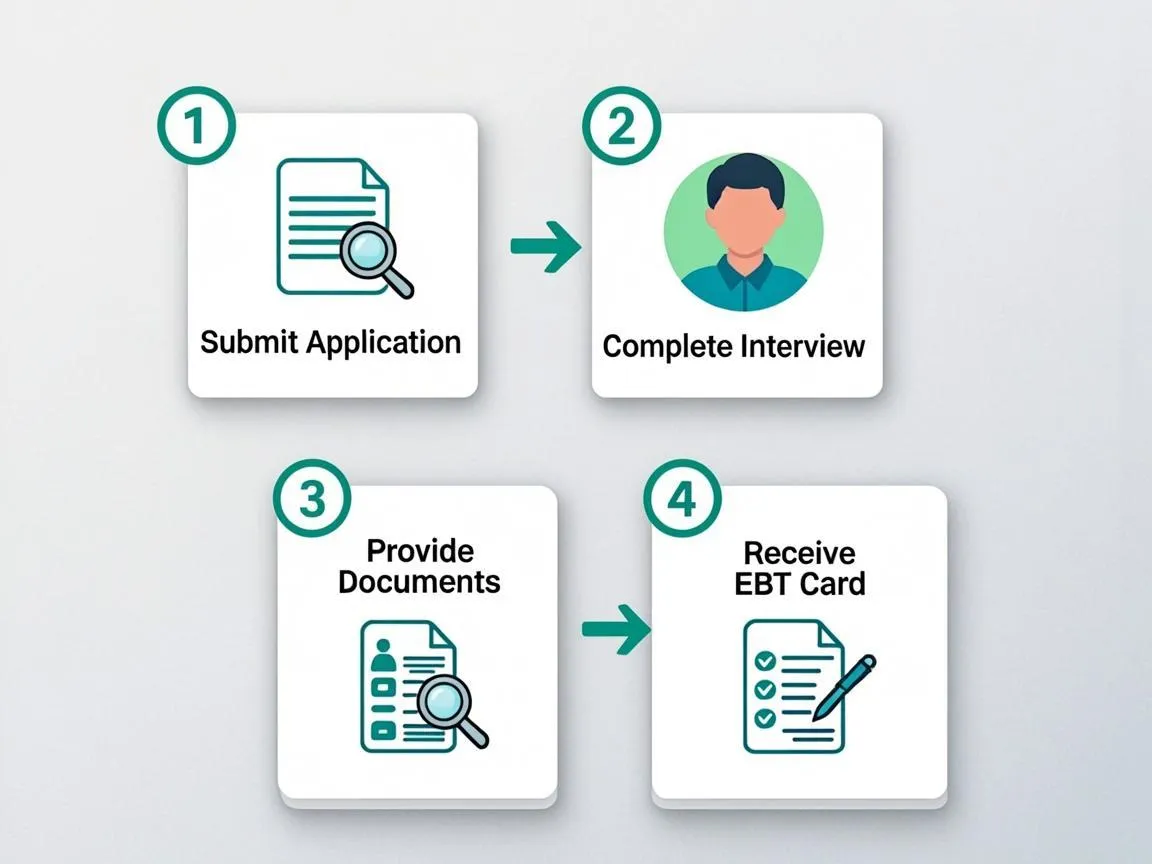
Day 0 — Submit Your Application
You apply online through BenefitsCal, by phone, in person, or by mail. The moment your application is date-stamped, the 30-day clock starts ticking. Online submissions are timestamped instantly. Mailed applications use the postmark date.
Days 1–5 — Application Received and Assigned
Your application enters the county system and gets assigned to an eligibility worker. Busy counties like Los Angeles or San Diego can take the full five days. Smaller counties often assign within 24 hours. You may receive a confirmation letter or phone call during this window.
Days 5–10 — Interview Scheduled and Completed
The county contacts you to set up an interview. Phone interviews are standard in California now — most applicants never visit an office. If you miss the call, reschedule quickly. The interview covers your income, expenses, and household composition.
Days 10–20 — Verification Documents Reviewed
Your worker reviews the documents you submitted — pay stubs, rent receipts, utility bills, ID. If anything is missing or unclear, they'll send you a request for additional information. This is where delays happen. Respond within 10 days or your application could be denied.
Days 20–30 — Eligibility Determination
current SNAP income limits for your household sizeDay 30+ — EBT Card Arrives
Once approved, your EBT card is mailed. Delivery takes 3 to 7 business days in California. Some counties offer same-day card pickup at the local office — call and ask. Your first month's benefits are loaded onto the card automatically once it's activated.
So from start to finish, a typical CalFresh application takes roughly 3 to 5 weeks. Expedited cases move much faster. Let's look at how that works.
Expedited Processing: 7-Day Emergency SNAP
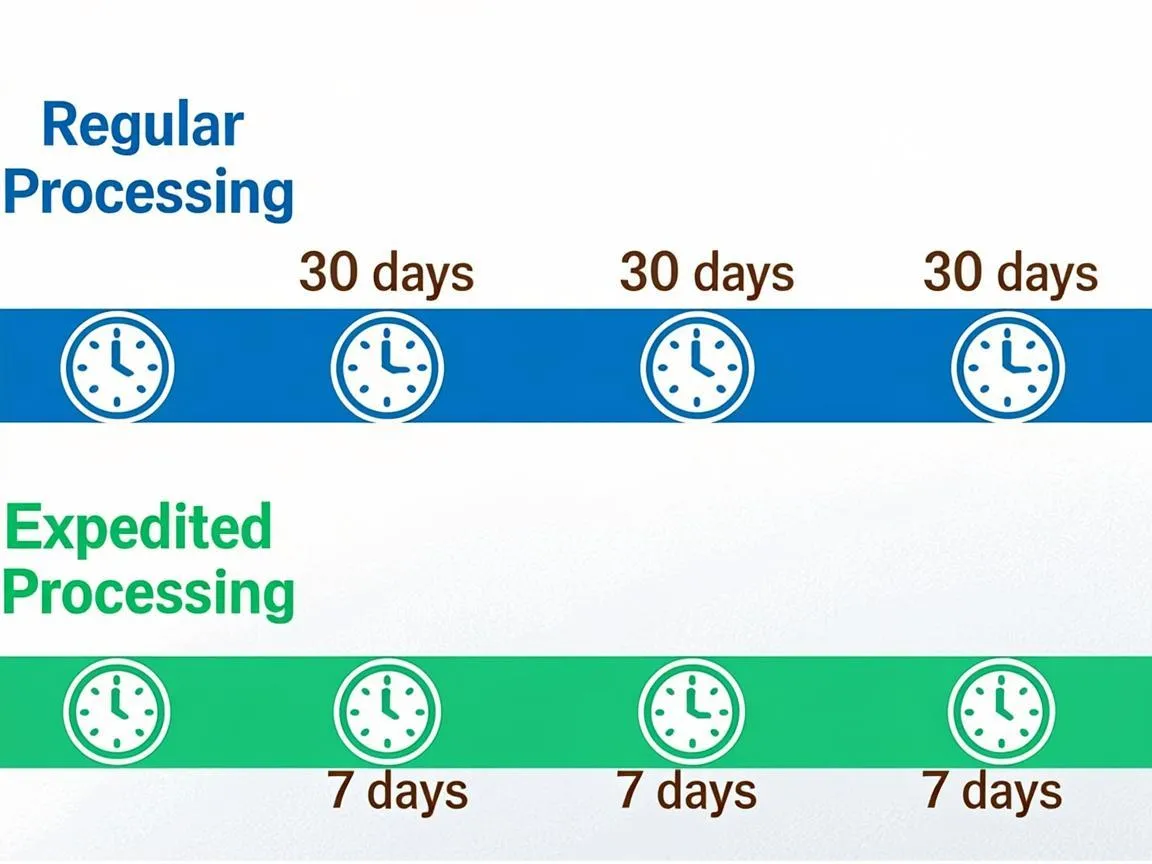
Apply today → Benefits in 7 days. If you qualify for expedited SNAP, you can't be forced to wait the full 30 days. The county must get you benefits within one week.
Who Qualifies for Expedited Benefits?
You meet expedited criteria if any of these describe your household right now:
- Little or no income: Your household's gross monthly income is under $150, and your cash on hand (bank accounts, cash) is $100 or less.
- Housing costs exceed income: Your rent or mortgage plus utilities are more than your monthly income plus cash on hand.
- Migrant or seasonal farmworker: You're a migrant worker with $100 or less in cash on hand.
These rules are straightforward. If you just lost a job, have almost nothing in the bank, and rent is due — you likely qualify. The county screens for this automatically when you apply, but it doesn't hurt to mention it.
What You Get with Expedited SNAP
You receive a full month's benefit amount for the first month. The county calculates your benefits based on the information you provided. If some verification documents are still missing, they can approve you using what they have and sort out the details later.
Don't skip the interview. Even with expedited benefits, you still must complete the interview. If you miss it, your benefits could stop after the first month. The interview deadline is shorter too — usually within a few days of applying.
Expedited Timeline
Day 0: You apply and mention your emergency situation. Day 1-3: The county processes your case priority. Day 4-7: Benefits are loaded onto your EBT card. In some counties, you can pick up the card in person on day 4 or 5 instead of waiting for mail.
The key difference is urgency. Your application jumps to the front of the queue. Workers are required to handle expedited cases first.
What Delays Your Application
Most delays come from the applicant's side, not the county's. Understanding what slows things down helps you avoid the trap.
Missing Documents
The number one cause of delays. Your worker asks for a pay stub and you can't find it. Or you send a bank statement when they needed a rent receipt. Each round of back-and-forth adds days to your timeline.
Incomplete Interview
You miss the scheduled phone call. Or you answer but don't have the information they need. The interview has to be rescheduled, and depending on the county's availability, that could add a week.
Verification Problems
Documents that don't match what you reported. A pay stub showing different income than your application. A landlord verification that takes weeks to come back. These discrepancies trigger additional review.
High Caseload Periods
SNAP emergency allotments guideHere's the frustrating part: the 30-day clock doesn't pause while you gather documents. If you take 15 days to find a missing pay stub, your worker now has just 15 days left to finish everything else.
The best move is to have every document ready before you apply. Even better — apply online so your documents are uploaded instantly and there's no mail delay.
How to Speed Up Your Application
You can't control how fast the county works. But you can remove every obstacle on your end. These four steps make the biggest difference.
1. Apply Online
BenefitsCal or the SNAP online portal2. Have All Documents Ready
Before you start the application, gather everything: government ID, Social Security numbers for everyone in your household, last 30 days of pay stubs (or a letter from your employer), rent or mortgage statement, utility bills, and bank statements. Having these ready eliminates the back-and-forth that kills timelines.
3. Complete Your Interview Quickly
The county will call or write to schedule your interview. Respond immediately. Don't wait three days to call back. If you can, ask for a same-day or next-day interview when they first contact you. Phone interviews typically take 15 to 30 minutes.
4. Respond to Requests Fast
If your worker asks for additional documents, send them the same day. Upload through BenefitsCal if possible — it's faster than faxing or dropping off paper. Every day you delay is a day borrowed from the county's processing time.
Pro tip: Save your worker's direct phone number and fax. When you need to send something, go straight to them instead of going through the main office line. It cuts out the middleman and saves days.
State-Specific Processing Times
Every state runs SNAP under federal guidelines, but processing speed varies. Some states invest more in staff and technology. Others struggle with higher caseloads per worker. Here's how the major states compare.
| State | Typical Processing Time | Online Portal | Expedited Timeline |
|---|---|---|---|
| Alabama SNAP Calculator | 15–30 days | MyDHR | 5–7 days |
| Alaska SNAP Calculator | 15–30 days | Alaska SNAP Portal | 7 days |
| Arizona SNAP Calculator | 10–30 days | Health-e-Arizona | 5–7 days |
| California (CalFresh) | 14–30 days | BenefitsCal | 3–7 days |
| Florida | 14–30 days | MyACCESS | 7 days |
| New York | 10–30 days | ACCESS HRA | 5–7 days |
| Texas | 15–30 days | YourTexasBenefits | 7 days |
California's CalFresh program typically processes in 14 to 30 days. Rural counties with smaller caseloads often move faster. Los Angeles County, handling over a million cases, sometimes pushes right up against the 30-day limit.
New York and Arizona tend to process on the quicker end, often wrapping up in 10 to 15 days for straightforward cases. Texas and Florida fall in the middle of the pack.
Other states follow similar patterns. The 30-day federal maximum applies everywhere, and expedited benefits must arrive within 7 days regardless of which state you live in.
After Approval — When Do Benefits Start?
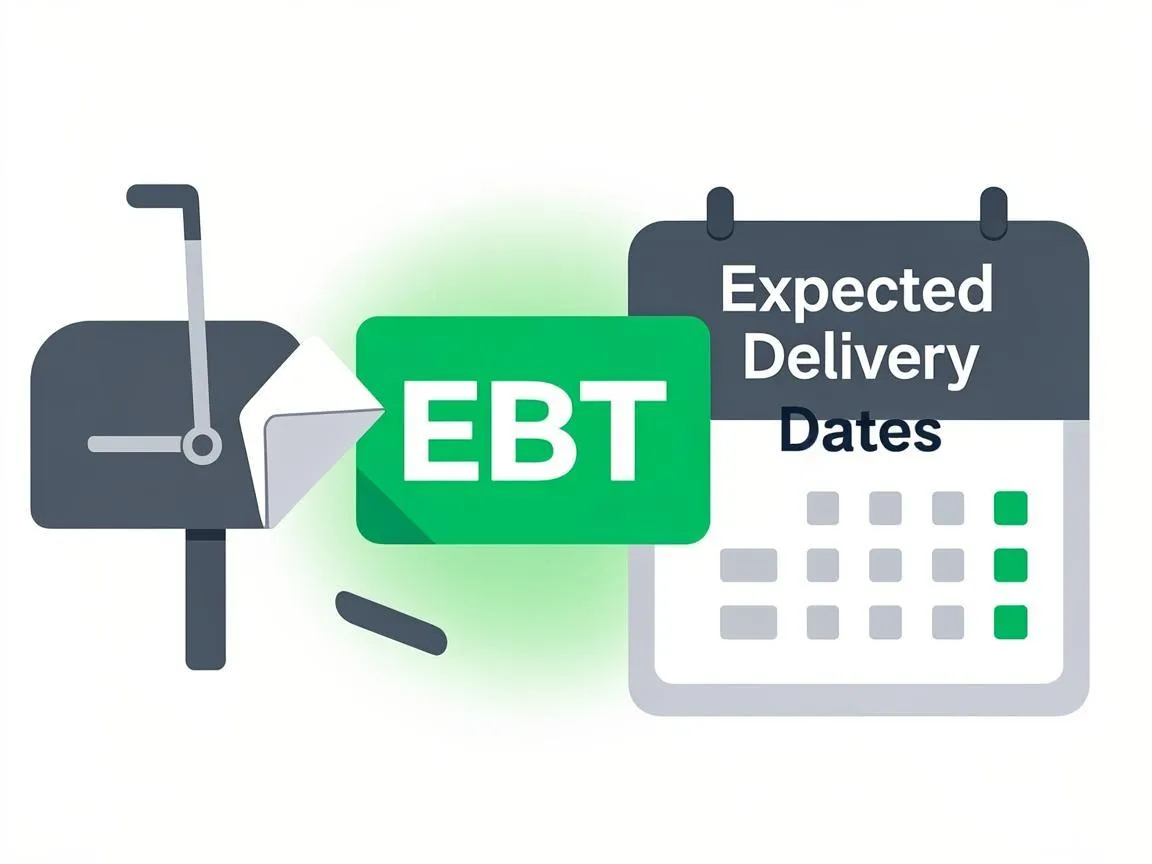
Getting approved is one thing. Actually receiving money on your EBT card is another. Here's how the timing works.
First Month Proration
Your first month's benefits are prorated from the date you applied, not the date you were approved. If you applied on the 15th and got approved on the 25th, you still get benefits for the 15th through the end of that month. The later you apply in the month, the smaller your first payment.
Example: If your full monthly benefit is $291 and you apply on the 20th of a 30-day month, your first deposit covers 11 days (day 20 through day 30). That comes out to roughly $107. Month two, you get the full $291.
Ongoing Monthly Deposits
After the first month, benefits arrive on a set schedule. Each state (and sometimes each county) assigns a deposit day based on your case number or the first letter of your last name. In California, deposits happen between the 1st and 10th of each month.
EBT Deposit Schedule
CalFresh benefits in California are deposited on a staggered schedule from the 1st through the 10th. Your exact day depends on the last digit of your case number. Once you know your day, it stays the same every month.
use them at eligible stores for food purchasesCommon Questions About Application Timing
Can I Check My Application Status?
Yes. In California, log into BenefitsCal and check your case status. You can also call your county's CalFresh office — have your case number ready. Some counties send text or email updates if you opt in during the application.
If it's been more than 15 days and you haven't heard anything, call. Don't wait for them to reach out. Sometimes letters get lost or phone calls go to spam.
What If I'm Denied?
You have 90 days to request a fair hearing. File the request with your county or call the state hearing line. In the meantime, you can submit new documentation if the denial was based on missing or incorrect information. Sometimes a simple correction reverses the decision.