
This guide walks through what the SNAP asset test is, what counts and what doesn't, how BBCE changes the picture state by state, and how to prepare your verification documents if you do face the resource limit. Whether you are applying for the first time or recertifying, you will know exactly where you stand before you fill out the application.
What Is the SNAP Asset Test?
The SNAP asset test, also called the resource test, is a financial screen that checks whether your household holds too much money in countable resources. Resources are funds you could theoretically access to buy food. The test sits alongside the income test, and most applicants must pass both to qualify.
CBPP Quick Guide USDA FNA BBCE chartRoughly 37 states plus the District of Columbia, Guam, and the Virgin Islands operate under BBCE rules that effectively remove the asset test for most applicants. That means only about one in four SNAP households nationally ever faces the resource limit during the application process.
Federal Asset Limits for FY2026
For federal fiscal year 2026, which runs from October 1, 2025 to September 30, 2026, the asset limits are unchanged from 2025. The USDA Food and Nutrition Administration (FNA, formerly FNS) sets the limits each fall based on the cost-of-living adjustment.
| Household Type | Federal Asset Limit (FY2026) |
|---|---|
| Standard household (no elderly or disabled member) | $3,000 |
| Household with a member age 60+ or with a disability | $4,500 |
These limits apply per household, not per person. A married couple with no elderly or disabled members shares a single $3,000 ceiling. If the same couple has a 65-year-old parent living with them, the household uses the higher $4,500 limit.
The limit is checked once at application and again at recertification. If you receive an asset like an inheritance or a settlement during your certification period, it does not affect your eligibility until your next recertification, but it may affect eligibility at that point. Some states also run periodic "mid-period" reviews for households that reported large lump-sum income.
SNAP income limits and FPL chartWhat Counts as an Asset for SNAP
Federal SNAP rules define a countable asset as any resource that is liquid, accessible, and could be used to purchase food. The list is short and concrete, which makes the test easier to self-check than most people expect.

The following items count toward the federal $3,000 / $4,500 limit:
- Cash on hand, including currency, coins, and money in your wallet
- Checking and savings account balances at any bank or credit union (Propel state-by-state guide, Apr 2026)
- Cash held in payment apps like Cash App, Venmo, and PayPal (per the Pennsylvania SNAP handbook)
- Stocks, bonds, and mutual funds, valued at current market price
- Certificates of deposit (CDs), even if they are not yet matured
- Non-redeemable savings bonds, valued at the current redemption amount
- Real estate other than your primary home — rental property, vacant land, second homes — valued at equity (fair market value minus any loan owed)
- Some lump-sum payments that are not exempted, such as certain insurance settlements after the month of receipt
- Prepaid cards that hold cash value, including some gift cards and reloadable debit cards
The key question caseworkers ask is whether the asset is "available" to the household. If you can access the funds within a reasonable timeframe without penalty, the asset counts. If accessing the funds would require selling your home, liquidating a retirement account, or paying an early-withdrawal penalty, the asset is generally excluded.
SNAP application documents checklistWhat Does NOT Count as an Asset
The exclusions are broader than the countable list, and many applicants who fear they will fail the asset test are actually fine once the exclusions are applied. Federal law and USDA regulations carve out several categories that are completely ignored for SNAP purposes.
The following items do not count toward the $3,000 / $4,500 asset limit:
- The home you live in, including the house, condo, mobile home, or apartment you occupy as your primary residence
- Retirement accounts such as 401(k), 403(b), IRA, Roth IRA, pension plans, and Keogh plans (USDA FNA Excluded Retirement Accounts)
- Most vehicles, depending on your state's vehicle policy and BBCE status (more on this below)
- Household goods and personal effects — furniture, appliances, clothing, jewelry with limited resale value
- Federal assistance payments such as TANF, SSI, and certain tribal payments, the month they are received
- Education savings including most 529 plans and Coverdell ESAs while held in the account
- Federal student aid including Pell Grants and federal loans while in the student's name
- Earned Income Tax Credit (EITC) refunds received in the 12 months after filing
- Income that is not yet accessible — for example, a paycheck not yet received or a settlement not yet paid
- Resources of someone receiving SSI if that person is in your SNAP household
- Resources that are "inaccessible" such as funds frozen by a court order or in a non-transferable trust
How BBCE Lets Most States Skip the Asset Test
USDA FNA BBCE page $2,610 per month for a one-person household $3,526 for a two-person household Pennsylvania DHSIf your state uses BBCE and your gross income is at or below that threshold, you do not have to pass the asset test at all. Your bank balance, savings, and stocks simply do not matter for SNAP eligibility. Only your income and the standard deductions are checked.
CBPP's March 2026 BBCE report state-by-state SNAP resource limit chartStates That Still Apply a SNAP Asset Test
Propel's state-by-state chart- Alaska
- Arkansas
- Idaho
- Indiana
- Kansas
- Mississippi
- Missouri
- Nebraska
- South Dakota
- Tennessee
- Texas
- Utah
- Wyoming
The remaining 37 states, DC, Guam, and the Virgin Islands have waived the asset test through BBCE for most applicants. Households in those jurisdictions do not need to report bank balances or stocks unless their gross income exceeds the state's BBCE cap.
SNAP and Medicaid eligibility connectionHow Vehicles Are Counted Under SNAP
Vehicles are the most confusing part of the SNAP asset test because the rules are a patchwork of federal defaults and state-by-state variations. Federal law sets a base rule, but states can choose from several alternative methods.
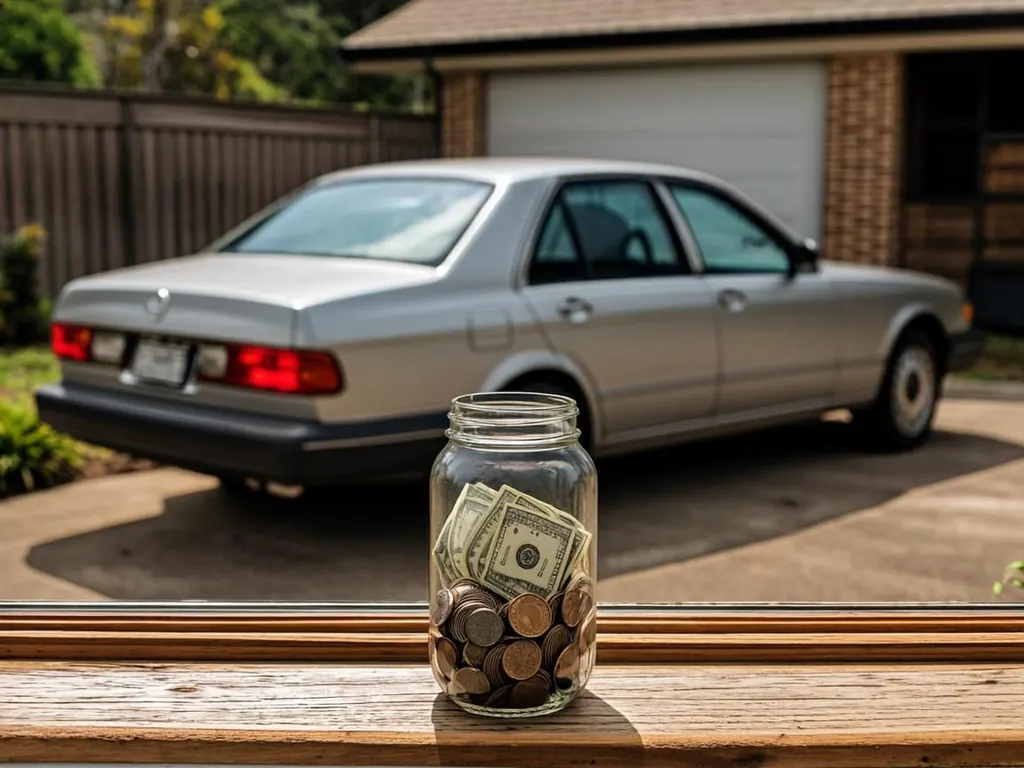
- Fair market value (FMV) test: the vehicle's current used-car value above $4,650 counts as a resource
- Equity value test: the vehicle's equity (FMV minus any loan balance) above $4,650 counts as a resource
The first $4,650 of either value is exempt, and the higher of the two excesses is what gets added to your total countable assets. So a car worth $8,000 with no loan adds $3,350 to your asset total ($8,000 - $4,650 = $3,350). A car worth $8,000 with a $5,000 loan has an equity value of $3,000, which is below $4,650, so nothing counts.
vehicles never count as a SNAP resourceVehicles used for specific purposes are always excluded regardless of state. That includes vehicles used for farming, vehicles used as a home (such as a camper or houseboat), vehicles used to transport a household member with a disability, and vehicles producing income (such as a taxi or delivery vehicle) as long as the income test is met.
How to Calculate Your Countable Assets
Calculating your countable assets is a five-step process that you can do in about 15 minutes with your bank statements in hand. The goal is to arrive at a single number you can compare against the $3,000 or $4,500 limit.
- List every bank account in your name or jointly held with a spouse. Note the current balance from your most recent statement.
- Add cash on hand including money in your wallet and any cash stored at home.
- Add payment app balances from Cash App, Venmo, PayPal, and similar apps.
- Add investment account balances — stocks, bonds, mutual funds, and CDs at current market value.
- Apply vehicle rules using your state's exemption method, and add any excess over the exemption to your total.
If your household includes a member age 60 or older or with a disability, use the $4,500 limit. Otherwise, use $3,000. Compare your total to the limit.
If you are under, you pass. If you are over, check whether your state operates BBCE and whether your gross income falls under the BBCE cap.
Here is a quick example. A two-person household in Missouri (a non-BBCE state) has $1,800 in checking, $400 in savings, $200 in Cash App, $1,000 in stocks, and one paid-off car worth $9,000.
The car adds $4,350 to countable assets ($9,000 FMV minus the $4,650 federal vehicle exemption). Total countable assets: $7,750.
That is over the $3,000 standard limit. If the household has a member over 60, the limit rises to $4,500 — still below the total. To qualify, the household would need to restructure assets (for example, by paying down debt or moving funds into an IRA, which is excluded).
Documents You Need to Verify Assets
Food Bank NYC SNAP document list Georgia DFCS handbookThe most common asset verification documents include:
- Bank statements for every checking and savings account, covering the most recent 30 to 60 days
- Online bank statement printouts, accepted by most states if they show the bank name, account number, and current balance
- Stock, bond, and CD statements from your brokerage, showing current market value
- Cash app balance screenshots from Cash App, Venmo, or PayPal with the username visible
- Vehicle titles and loan statements, if your state counts vehicles and your car is over the exemption
- Real estate documents including deeds and mortgage statements for any property other than your primary home
- Written statements from people who gave you cash loans or gifts, if those amounts are countable
States must accept alternative verification if you cannot get a bank statement. You can sign a form (such as Illinois Form 46 Bank Inquiry) authorizing the caseworker to request the bank statement directly from your bank. You can also provide written statements from third parties, such as a landlord or family member, who can confirm your resource situation.
SNAP interview processFrequently Asked Questions
What is the SNAP asset test limit for 2026?
$3,000 for most households $4,500 for households with a member age 60 or older or with a disability USDA FNA SNAP eligibility pageDoes California have a SNAP asset test?
CalFresh legal aid guideDo retirement accounts count toward the SNAP asset limit?
USDA FNA excluded retirement accounts pageWhich states still apply the SNAP asset test?
Propel's state chartDoes my car count toward the SNAP asset limit?
above $4,650 Texas HHS handbookCan I still get SNAP if I have savings?
Yes, especially in BBCE states where savings do not count at all. Even in states that apply the asset test, you can have up to $3,000 in countable assets (or $4,500 with an elderly or disabled household member) and still qualify. Excluded resources such as retirement accounts and your primary home do not count toward the limit.
How do I prove my assets for SNAP?
Georgia DFCS SNAP handbookRelated SNAP Guides
- SNAP Income Limits and FPL Chart — Understand how the gross and net income tests work alongside the asset test
- SNAP Deductions Explained — How the standard, shelter, medical, and childcare deductions lower your countable income
- SNAP Emergency Allotments Explained — How extra SNAP allotments work and who qualifies during state-declared emergencies
- How to Apply for SNAP Online — Step-by-step online application process in your state
- CalFresh Interview Process — What to expect in the SNAP eligibility interview and how to prepare your documents